Trails of Pastoralism and Poromboke
Updated: Oct 3, 2025

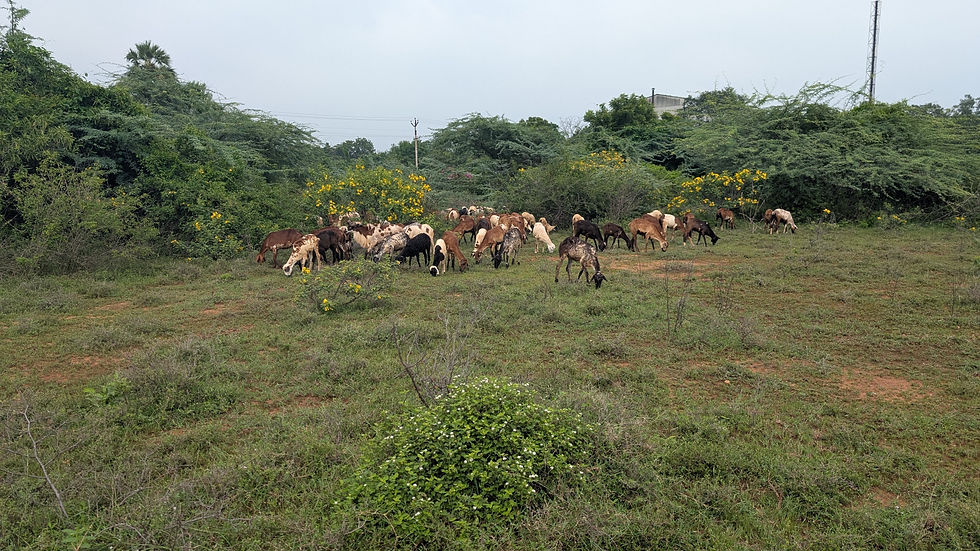
“Ahhey ahhey Koovu”, called out Velmurugan anna, a pastoralist from Vellanguli, Tirunelveli. “Each goat herder has their own unique sounds to control their goats while grazing” said Velmurugan while grazing his goats in the open lands of Thekku Veranallur near Vellanguli. Velmurugan has 80 semmari goat and a small patch of land (0.66 acres) in which he cultivates banana and paddy. It was a pleasantly warm afternoon in the month of November and hence met Velmurugan near his village itself. “We migrate to nearby areas for grazing and setting up kidai (hosting of livestock in agricultural farms) in non-agricultural seasons. I will be at Giriyammalpuram in Panguni and Chitirai (mid February - mid April), at Nanthanthattai in Vaigasi and Aani (mid April - mid June) and at Pallakkal Pothukudi in Aadi and Avani (mid June - mid August)” mapped Velmurugan.

The farmers usually pay a small amount to the pastoralists to set up kidai in their farm as it increases the soil fertility. However, the relationship and bond are slowly breaking. “The farmers are not paying us properly for setting up kidai in their farm. They hardly give us Rs 100 per person” he said. Pastoral communities are vulnerable as they are migrating to other villages. “We hear casteist slurs and are ill-treated by few people. We must give a goat kid to the local rowdy free of cost, otherwise they threaten us” lamented Velmurugan. Pastoral communities are facing various issues like drastic reduction of grazing lands, plastic wastes dumping in grazing land eating which livestock falls sick, fencing and blocking of traditional migratory route has increased the risk of road accidents as they migrate through highways, competition in market from farm grown goats and bulkier goat varieties from Andhra Pradesh, increasing diseases due to climate change and much more.